
Leaving a mark
Rewritten from a 2010 blog post

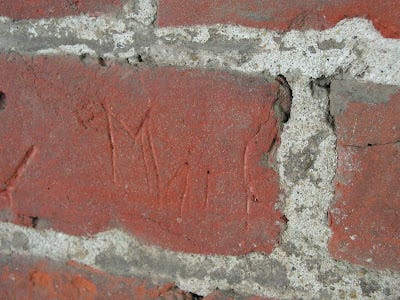
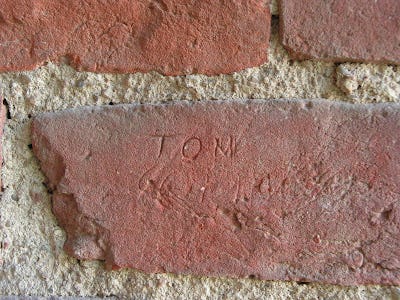
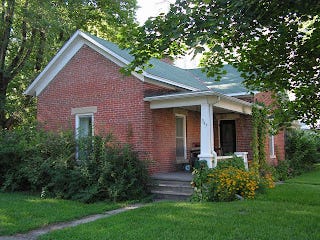
I used to live in an old house made of soft brick. People who lived there long before me made their mark on the house, and so did I. No, I didn’t carved my name in the brick, as the unknown Mark and Tom did (weird that these are also two of my brothers’ names), but I made it my own, with a new back door, with rose beds and perennials and with an ineffable Priscilla-ness.
That’s what I do with stories. I make my mark on them, turning them around in my head, my heart and my mouth so when I finally tell them they are my own.
Ah, but here’s the trick. They’re not completely mine. I have to let them go. When I put them out in the world, when I tell them, the listeners then own them as well. I can’t--and wouldn’t want to--control the images the listeners hold in their heads. Every time I see those names carved in the brick of my house, I think of my brothers Mark and Tom. A different Mark and Tom carved their names, but I see images of my brothers, aged about 7 and 9.
I once heard storyteller Donald Davis say in a workshop, “Meaning is the property of the listener, not the teller.”
I’ve thought about this a lot. It’s true, and it’s also true that if I do my job completely, if I imagine the characters, action and scenes so fully that they come out of my mouth as fully dimensional, the listeners may imagine them clearly as well. When we’re all truly present to the story, we all see the pictures. The story leaves a mark.
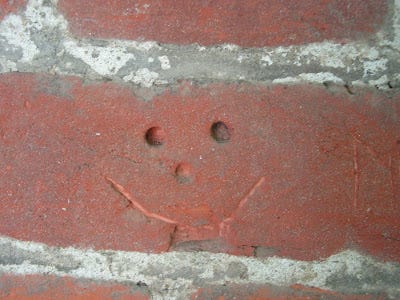
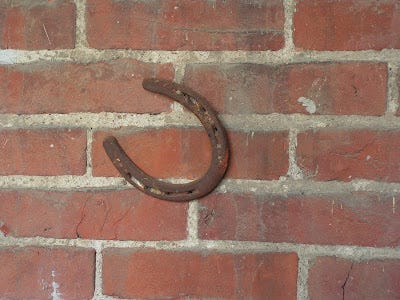
"The story leaves a mark." or a Tom!
Loved the brick and house tale. What this house tells could be a series. THANKS